08 Jan Math, STEM Learning & Numeracy: Building Bridges from Classrooms to Careers
“I inspire students by creating fun, out-of-the-box, and non-traditional learning experiences. Students often experience math as a series of lectures, even during problem-solving. Showing them that math can be engaging and enjoyable helps break that cycle and fosters curiosity.”
– Ericka Marshall Mabion, Kansas City Public Schools
Not too long ago, the KC STEM Alliance team spent the morning with math educators and instructors from the MoKan Laborers Training Center, IBEW Local 124, and LIUNA, at the invitation of the National Institute for Construction Excellence (NICE). Together, we explored how math shows up in the skilled trades directly from the professionals who teach it every day.
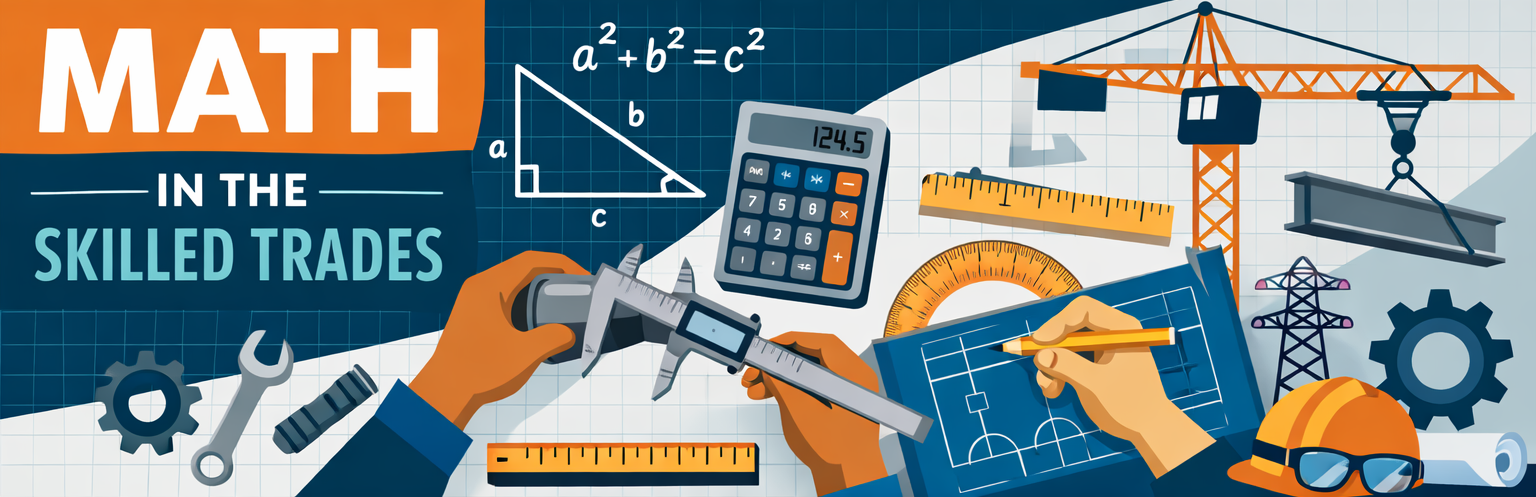
What we saw was clarifying. In these spaces, algebra, geometry, and trigonometry weren’t abstract concepts. They were essential, practical tools. Whether calculating pipe angles, estimating materials, or applying formulas to ensure structural safety, math was everywhere, used constantly and intuitively.
That experience reinforced something we already knew but had the opportunity to witness firsthand: the trades are STEM careers, and we should talk about them as such. They rely on the same mathematical reasoning, problem-solving, and technical precision that underpin engineering, design, and biomedical science. And yet, for many students, math still feels disconnected from the real world—something to endure rather than something to engage with.
This disconnect is exactly why collaboration matters.
“Collaborating with like-minded professionals is invigorating and reinforces the value of shared ideas,” Mabion shared. “Engaging students in practical applications of math – through research, evaluation, field trips, and industry partnerships helps them reimagine how accessible and relevant math can be.”
That’s where partnerships among KC STEM Alliance, Kansas City Public Schools, Project Lead The Way, and workforce partners play a critical role. By connecting classroom learning to authentic, hands-on experiences, students begin to see not just how math works, but why it matters.
The need is clear. According to the National Assessment of Educational Progress, only 36 percent of Missouri fourth graders reached proficiency in math in 2024. While that reflects a small improvement from previous years, it’s also a reminder of the work still ahead to make math learning relevant, accessible, and empowering.
At KC STEM Alliance, we see math embedded across every STEM pathway. Construction workers use geometry and spatial reasoning. Biomedical engineers rely on data analysis and proportional thinking. Environmental scientists calculate formulas that protect shared resources. Across disciplines, math is the connective tissue of innovation.
So how do we help students connect the dots?
- First, make math visible. Show how numeracy powers real-world work through robotics, construction site visits, and hands-on STEM challenges.
- Second, integrate rather than isolate. Math shouldn’t live in a silo. Embedding numeracy across science, engineering, and design helps students understand its broader purpose.
- And finally, build confidence early. Numeracy isn’t just about ability, it’s about identity. When students see themselves as capable problem-solvers, their confidence grows.
“It’s not shameful to lack knowledge,” Mabion noted. “But it is a missed opportunity if we fail to act when we know we can do better.”
When young people understand math as a creative, empowering tool, they don’t just become better students. They become better thinkers and builders. As a region, we have the opportunity to turn numeracy from a barrier into a bridge—and to show every student that math can be mastered and made their own.